In this day of pervasive communications through a multitude of devices and networks does Amateur Radio still have a role to play in Emergency Communications? We will discuss past disasters, current needs, and future requirements. We will also look at current and upcoming technologies; as well as communication basics.
HARC member Lee n4tcw will be speaking from personal experience operating in the aftermath of Hurricane Andrew in Miami.
So finally got around to experimenting with recording some videos of the last couple objectives using the program “recordmydesktop” and the results were more than a little underwhelming. You can view the vids here:
Set up a default config http server (also showed how to set it up to serve an install tree)
https://www.youtube.com/watch?v=VVn5UL7sNA8
Install Redhat Enterprise Linux as a virtual guest (from the command line using virt-install)
https://www.youtube.com/watch?v=yiUA1I4Q3Uk
Needless to say, I’m looking for another way to record my desktop sessions in a format that I can upload to youtube. Suggestions welcome! Once I have a better visual experience going I’ll add audio, redo these early attempts.
Also, let me know how I can improve the presentation or explanation of the tasks.
Tomorrow…we kickstart!
J
EDIT:
A few snafus I ran into when trying to get a virtual machine set up as an install server
1) DO set up your virtual network (or the ‘default’ network) to use a static IP range and turn off DHCP. Instructions here:
2) DON’T set your virtual network (or the default network if you are editing that one) to be within the same network as the host machine. I.e. if your host machine’s IP address is something like 192.168.15.10, don’t set your virtual network range to use 192.168.15.0/24. Set it to use 192.168.100.0/24. If you try to set up a virtual network as in the first example, the hypervisor will tell you that the IP you’ve selected is in use by the host system.
3) DO set up the new virtual machine to use an IP that’s in the same range as the virtual network you are using. I.e. if your virtual network uses 192.168.15.0/24, then set the static IP of your virtual machine to use something like 192.168.100.50.
To get some ideas on planning a field day for HARC, Martin kb3ujq, Lee n4tcw and Shawn ag4ve visited neighboring amateur radio clubs. The object of field day is to develop emergency preparedness skills and acquaint the public with amateur radio. All of the clubs operated their stations over a full day on electricity produced by gas generators. Field day is also a contest to contact as many stations as possible on amateur bands over a full day period, working stations day and night.
We got a late start on Saturday afternoon with a first stop with the Mt Vernon Amateur Radio Club at Pohick Lake Park. They were operating five stations on various frequency bands and modes (voice, morse code, digital text). Each station was tucked away from the others in the camp grounds and each had its own antenna strung from the tall trees. Luckily, we were just in time for a fine dinner of barbecue and fixings.
Next was the Ole Virginia Hams in Manassas. They were set up on the lawn of a public library and featured an air-conditioned tent housing five stations plus a GOTA (get on the air) station. The GOTA station allows newly licensed and unlicensed persons to experience first-hand talking over amateur radio. We also had some excellent spicy half smokes and watermelon for a second dinner.
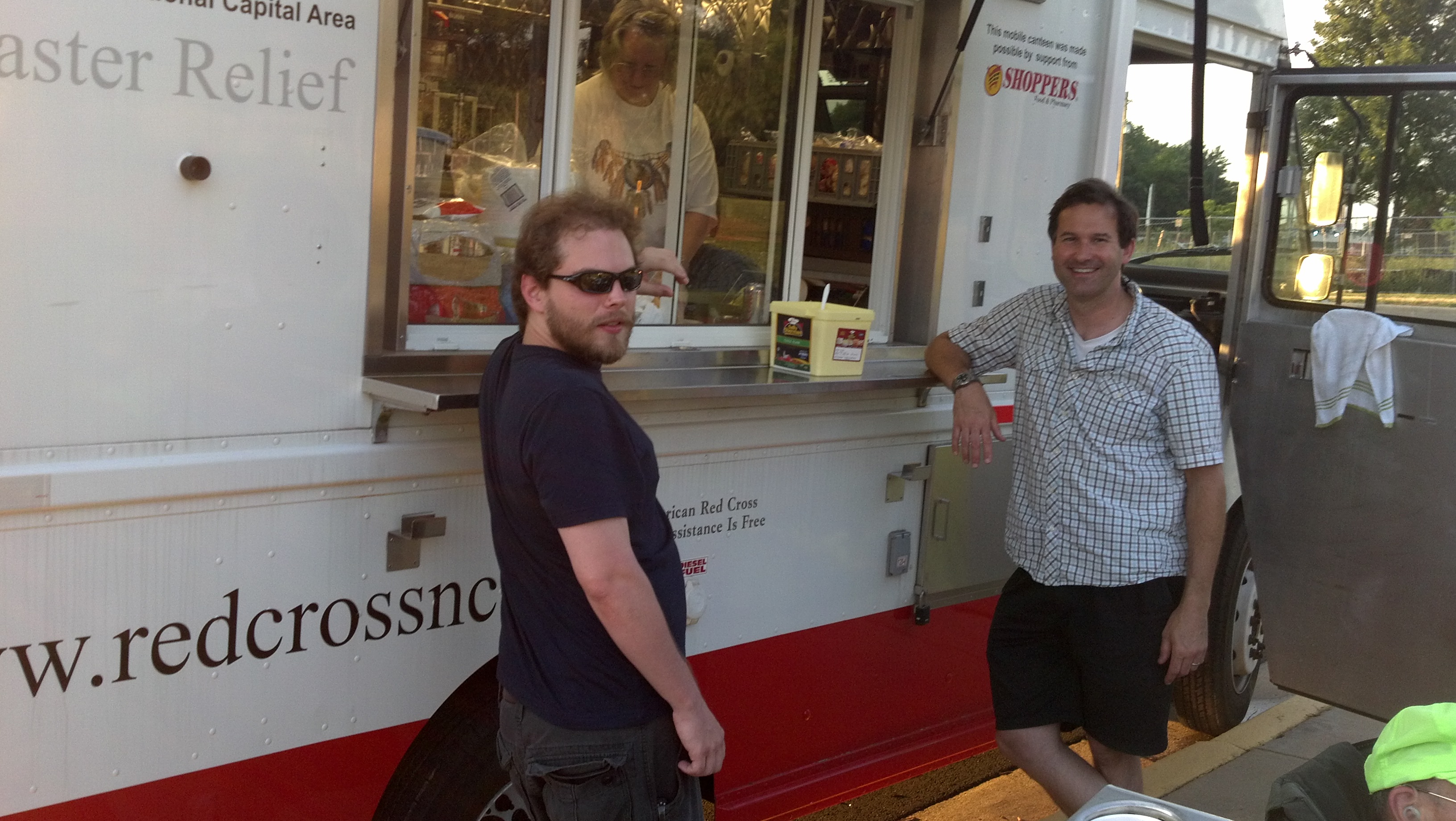
Shawn and Lee checking out OVH's food truck
We made it to Vienna Wireless Society at Burke Lake Park by dark. We were a little late for a third dinner but were shown around their various stations including an EME (Earth-Moon-Earth) bounce and satellite station. The EME station sends a signal that is reflected off the moon and is received back on earth.
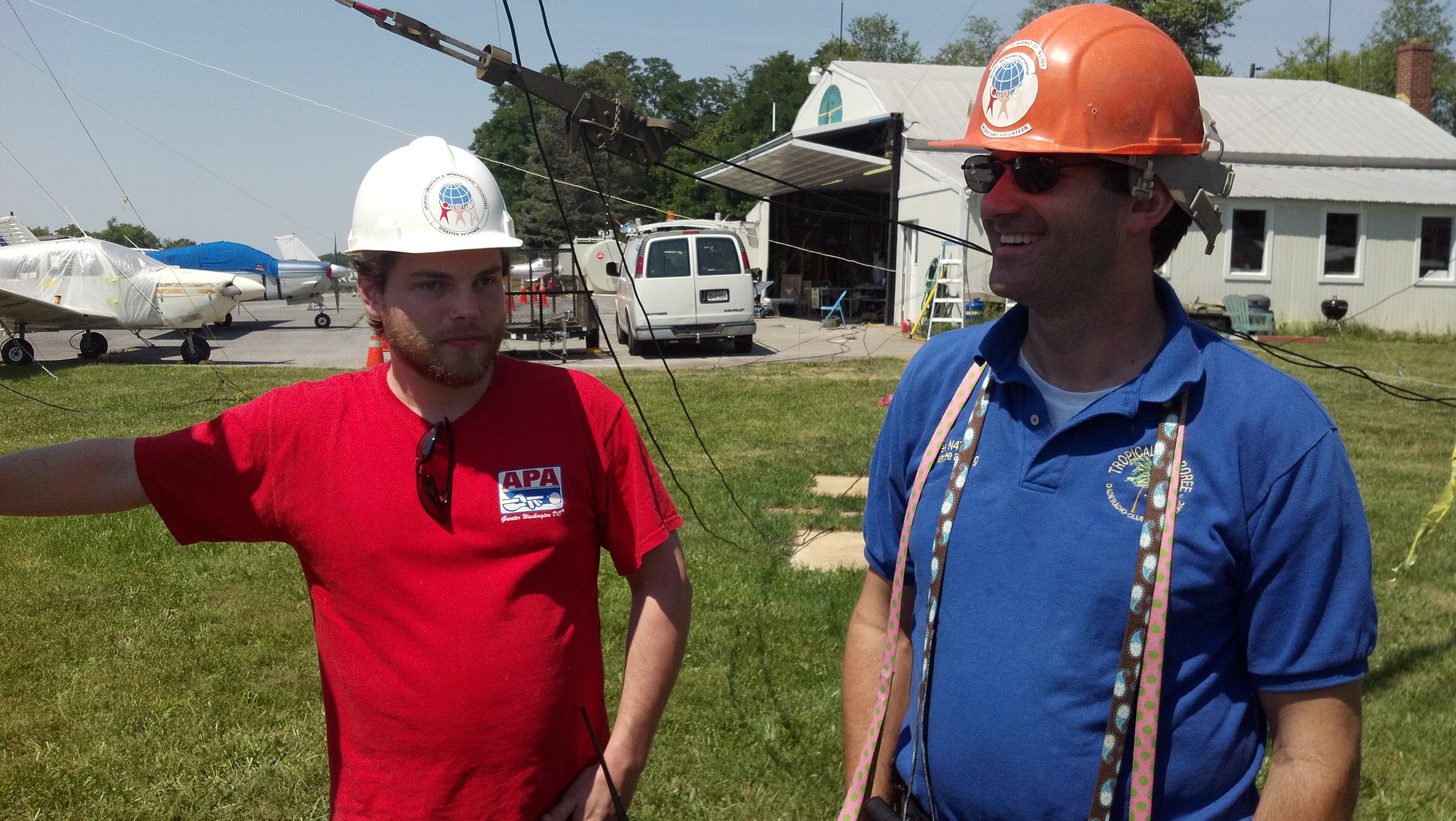
Sunday morning we visited Montgomery County Amateur Radio Club operating out of a hangar at Davis Airport in Laytonsville, MD. Their antennas were strung from large masts in a grassy field next to the hangar.
In MARC’s antenna farm
Everyone we visited were quite hospitable and proud of their installation. They all showed great proficiency in operating off the grid in other than usual locations. Most of all…the food was delicious!
Configure a system to run a default configuration HTTP server.
Configure a system to run a default configuration FTP server.
Jang’s book uses one of these to serve an install tree and packages so that we can later use it for configuring yum and doing other tasks. For right now we simply want to get the service up and running.
Next week we’re going to work on setting up some virtual machines so we can play around without endangering our base system. To see what we’ll be getting in to, take a look here at sections 15 and 16 on virsh and the virt-manager.